Features to Look for in an HRMS Software for Mid-Sized Companies in 2026
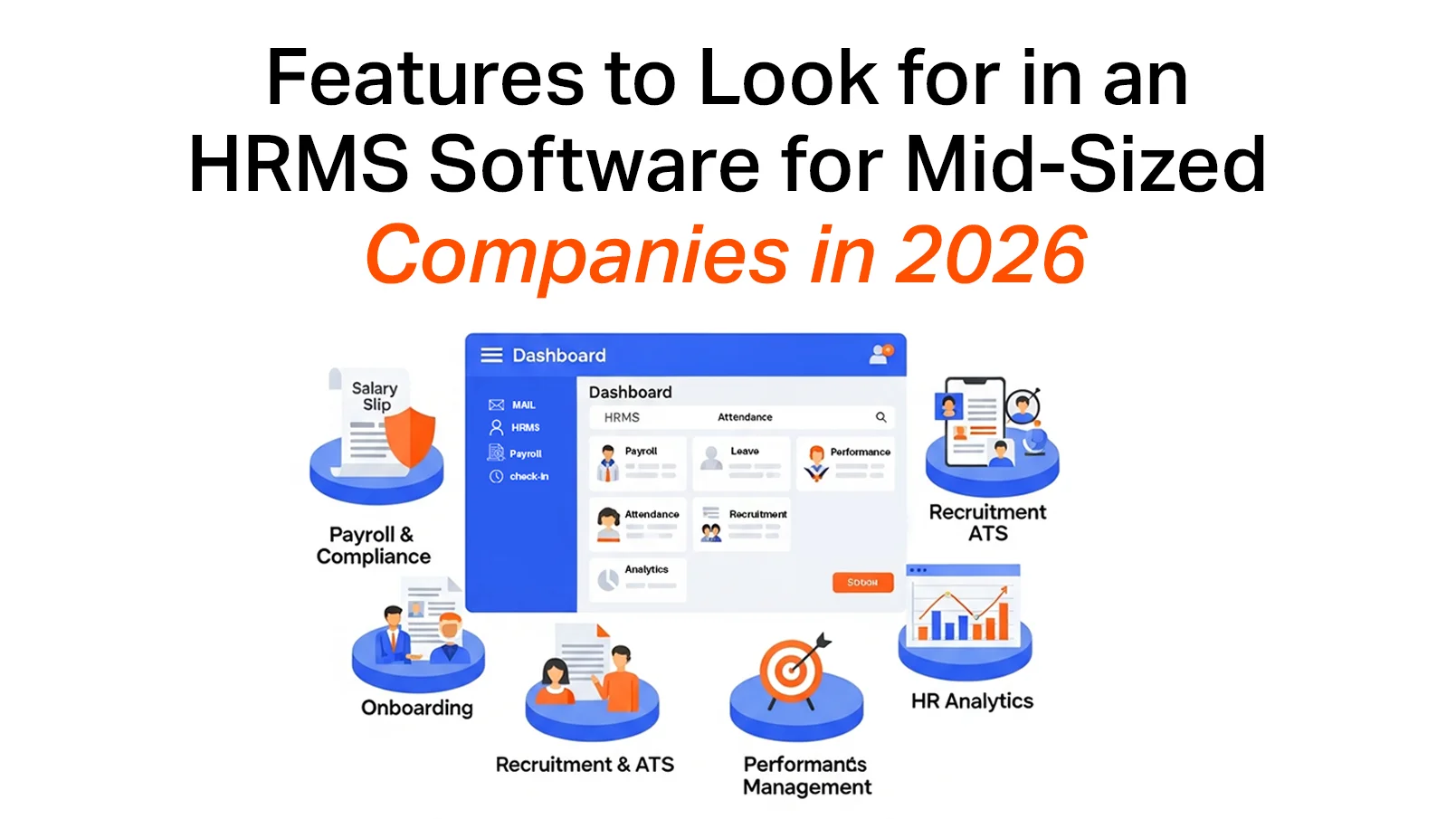
As we move into 2026, the way mid-sized companies manage their workforce is changing rapidly. Hybrid work models, stricter compliance requirements, data-driven decision-making, and rising employee expectations have made traditional HR processes outdated and inefficient.
For mid-sized organizations, HR is no longer limited to payroll and attendance. It now plays a strategic role in scaling teams, improving employee experience, and ensuring compliance—all while keeping costs under control.
This is why investing in the right HRMS software in 2026 has become a business-critical decision.
In this blog, we’ll explore the most important features to look for in an HRMS software for mid-sized companies in 2026, and how a future-ready solution like Prajjo HRMS can support sustainable business growth.
Why HRMS Software Is Essential for Mid-Sized Companies in 2026
Mid-sized companies often sit at a crucial growth stage. They are too large to rely on spreadsheets and manual HR processes, yet they require more flexibility and affordability than enterprise-grade systems.
In 2026, HRMS software helps mid-sized companies:
- Automate repetitive HR tasks
- Reduce payroll and compliance errors
- Support hybrid and remote workforces
- Improve employee engagement and retention
- Gain visibility into workforce data
- Scale HR operations without increasing headcount
Choosing an HRMS is no longer about convenience—it’s about future readiness.
1. Automated Payroll Management with Compliance Readiness
Payroll remains the backbone of HR operations, and in 2026, accuracy and compliance are more important than ever.
A modern HRMS should offer end-to-end payroll automation, including:
- Salary structure and CTC configuration
- Automated payroll processing
- Integration with attendance and leave data
- Payslip generation and distribution
- Income tax, PF, ESI, PT, and TDS compliance
- Year-end reports and audit-ready records
Manual payroll processing increases the risk of errors, penalties, and employee dissatisfaction. A centralized payroll module ensures timely and accurate salary processing while staying compliant with evolving labor laws.
Future-ready platforms like Prajjo HRMS integrate payroll seamlessly with attendance and statutory compliance, making payroll stress-free for HR teams in 2026.
2. Smart Attendance & Time Tracking for Hybrid Teams
By 2026, hybrid and flexible work models are the norm rather than the exception. Attendance management must adapt accordingly.
An HRMS for mid-sized companies should support:
- Biometric and device-based attendance
- Web and mobile check-ins
- Shift and roster management
- Overtime and late-mark calculations
- Real-time attendance dashboards
- Direct sync with payroll
Automated attendance tracking eliminates manual intervention and ensures fairness, transparency, and accuracy—especially for distributed teams.
3. Flexible Leave Management with Policy Control
Leave management in 2026 is about more than approving requests—it’s about balancing productivity and employee well-being.
Key leave management features include:
- Customizable leave policies (CL, SL, PL, WFH, comp-offs)
- Leave accrual and carry-forward rules
- Approval workflows
- Company holiday calendars
- Employee self-visibility of leave balances
- Attendance and payroll integration
Mid-sized companies often revise leave policies as they grow. A flexible HRMS allows HR teams to adapt policies without technical limitations.
4. Integrated Recruitment & Applicant Tracking System (ATS)
Hiring in 2026 is faster, more competitive, and more data-driven. An integrated recruitment module within HRMS can significantly improve hiring efficiency.
Look for features such as:
- Job requisition management
- Career page integration
- Resume parsing and shortlisting
- Interview scheduling
- Hiring pipeline tracking
- Offer letter generation
When recruitment flows directly into onboarding and employee records, HR teams save time and maintain data consistency—especially valuable for mid-sized companies with frequent hiring needs.
5. Digital Employee Onboarding & Offboarding
First impressions matter more than ever in 2026. A smooth onboarding experience boosts early engagement and productivity.
An HRMS should support:
- Digital document collection
- Automated onboarding checklists
- Policy acknowledgments
- Asset allocation tracking
- Role-based access provisioning
Similarly, structured offboarding ensures compliance, data security, and smooth knowledge transfer.
Automation reduces administrative effort while creating a professional and consistent employee experience.
6. Performance Management for Continuous Growth
Annual appraisals alone are no longer effective in 2026. Modern performance management focuses on continuous feedback and goal alignment.
A future-ready HRMS should include:
- Goal setting and OKRs
- Continuous feedback mechanisms
- Performance reviews and ratings
- Manager-employee review workflows
- Performance analytics and insights
For mid-sized companies, structured performance management improves accountability, engagement, and leadership visibility—while aligning individual goals with business objectives.
7. Employee Self-Service (ESS) for Empowerment
In 2026, employees expect transparency and autonomy.
An employee self-service portal allows employees to:
- View payslips and tax details
- Apply for leaves
- Check attendance
- Update personal information
- Access company policies
- Raise HR requests
ESS reduces HR dependency, improves employee satisfaction, and frees HR teams to focus on strategic initiatives.
8. Statutory Compliance & Labor Law Management (India)
Compliance complexity continues to grow in India, making automation essential in 2026.
An HRMS should help mid-sized companies manage:
- PF, ESI, PT, and TDS compliance
- Statutory filings and reports
- Audit-ready documentation
- Secure employee data storage
Non-compliance can result in penalties and reputational damage. A compliant HRMS ensures peace of mind and operational continuity.
9. Advanced HR Analytics & Dashboards
Data-driven HR decisions are a necessity in 2026.
Your HRMS should provide:
- Workforce analytics
- Attrition and retention insights
- Attendance and leave trends
- Payroll summaries
- Hiring and performance reports
Custom dashboards help leadership teams align HR strategy with business goals and plan workforce growth effectively.
10. Scalability & Customization for Future Growth
Mid-sized companies evolve quickly. The HRMS you choose today must support tomorrow’s needs.
Look for an HRMS that:
- Scales with workforce growth
- Supports multi-location operations
- Offers role-based access
- Adapts workflows as policies change
- Integrates with other business systems
A scalable HRMS ensures long-term value without frequent system changes.
11. Cloud-Based Access & Enterprise-Grade Security
In 2026, cloud-based HRMS platforms are the standard.
Benefits include:
- Anywhere, anytime access
- Automatic updates
- Secure data backups
- Reduced IT dependency
- Support for remote and hybrid teams
Security and reliability are critical when managing sensitive employee data.
Why Prajjo HRMS Is Built for 2026
Prajjo HRMS is designed specifically for the evolving needs of mid-sized companies in 2026. It offers:
- End-to-end HR automation
- Integrated payroll, attendance, and compliance
- Recruitment, onboarding, and performance management
- Employee self-service
- Actionable HR analytics
- Secure, cloud-based, and scalable infrastructure
By centralizing HR operations, Prajjo HRMS helps mid-sized organizations reduce manual work, stay compliant, and build a future-ready workforce.
Final Thoughts
In 2026, HRMS software is no longer optional for mid-sized companies—it’s a strategic investment.
The right HRMS should:
- Automate core HR processes
- Support compliance
- Empower employees
- Scale with business growth
- Provide data-driven insights
Choosing a future-ready platform like Prajjo HRMS ensures that your HR operations grow as fast as your business.
Experience Next-Generation
HR Software in Action
People-Centric HRMS: AI That Aligns Mission, People & Performance