HR Software: The Backbone of Modern People Management
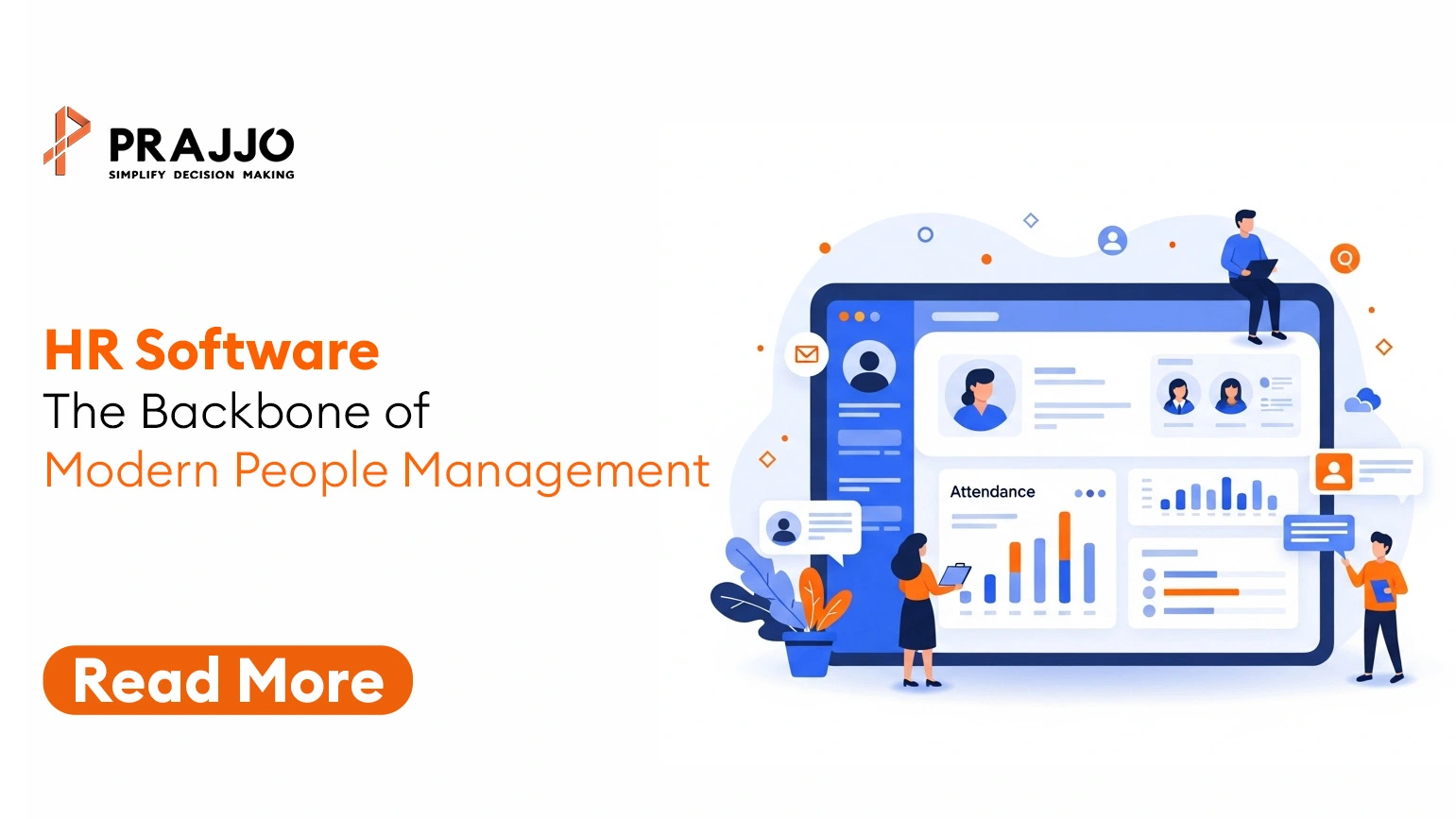
HR software has completely transformed how Human Resources functions inside an organization. Earlier, HR teams were overloaded with paperwork — employee files, leave forms, attendance registers, compliance reports, and countless spreadsheets. The role revolved around routine administration and firefighting rather than future planning.
But with business environments becoming more dynamic and employee expectations rising, organizations needed HR to step up as a strategic partner — focusing on growth, culture, performance, retention, and innovation. This shift was only possible with the adoption of digital HR tools.
Today, over 85% organizations globally use some form of HR software to automate workflows, improve accuracy, and elevate workforce experience. HR finally has the freedom to focus on people strategy — the true foundation of organizational success.
This comprehensive guide will help you understand everything about HR software — from what it is, types and features, to benefits, selection criteria, implementation roadmap, future trends, and how it accelerates business growth.
What is HR Software?
HR software is a digital platform built to support HR teams in managing the complete employee lifecycle. It centralizes workforce data, automates manual processes, and makes HR operations seamless, faster, and error-free.
It helps HR teams:
- Automate everyday tasks like attendance, payroll, approvals
- Minimize paperwork and manual entries
- Ensure data accuracy and compliance
- Enhance employee and manager self-service
- Provide visibility into workforce performance and trends
Modern HR software is available as:
- Cloud-based SaaS solutions → remote-friendly, scalable, and cost-efficient
- On-premise systems → higher control for large organizations with in-house IT teams
Cloud HR adoption has accelerated, especially with hybrid work — making HR more accessible and future-ready.
HR Software Examples
Today’s HR teams can select from a wide choice of digital tools. Depending on the needs, companies may opt for integrated HR suites or specific point-solutions.
Here are the most commonly used categories:
HRIS (Human Resource Information System)
Core system storing personal, employment, payroll, compliance, and leave data.
HRMS (Human Resource Management System)
A more advanced system including onboarding, performance tracking, and employee lifecycle management.
-
HCM (Human Capital Management Software)
Strategic workforce planning + analytics + talent optimization + engagement.
ATS (Applicant Tracking System)
Simplifies recruitment — resume filtering, interview scheduling, candidate journey tracking.
-
Payroll & Compliance Software
Automated salary calculations, deductions, local statutory compliance, payslips
-
Onboarding Systems
Paperless joining experience — task assignment, e-document signing, cultural introduction.
-
Performance Management Platforms
Goal setting, OKRs, appraisals, competency mapping.
LMS (Learning Management System)
Drives continuous employee growth through courses, assessments, certifications.
Employee Experience Platforms
Boost engagement via feedback cycles, surveys, recognition, internal communication.
Workforce Planning & Analytics Tools
Predict hiring needs, skill gaps, and turnover risks using data.
Compensation Management Software
Pay benchmarking, increments, variable pay management, pay transparency.
With a tailored combination, organizations can build an HR tech ecosystem that evolves as the workforce scales.
Features of HR Software
Each HR software includes multiple modules that simplify HR responsibilities and unify people processes.
Here’s what modern HR tools typically offer:
- Central employee database
- Digital document storage
- Biometric + mobile attendance tracking
- Leave and schedule management
- Payroll automation and tax compliance
- Recruitment workflows and hiring pipelines
- New hire onboarding automation
- Performance reviews, ratings & feedback
- Training and learning management
- Employee engagement — surveys, polls
- Rewards and recognition tools
- Workforce planning dashboard
- Secured role-based access
- Reporting & analytics
- Company announcements & policy sharing
- Digital signatures for forms & contracts
- Multi-location workforce support
These features ensure smooth operations across HR, managers, and employees — reducing effort and increasing transparency.
Benefits of HR Software
HR software doesn’t just support operations — it transforms organizational efficiency and culture.
Here’s how:
- Faster recruitment cycles with automated candidate management
- Reduced HR workload (up to 30–35% admin effort saved)
- Accurate and compliant payroll every cycle
- Engaged employees through recognition and communication
- Lower attrition with improved experience and growth systems
- Instant insights for smarter decisions
- Stronger company culture through transparency and collaboration
- Cost savings via automation and error prevention
- Seamless hybrid workforce management via remote accessibility
When employees find processes easy, they become more productive — directly benefiting the organization.
How to Choose the Right HR Software for Your Business
Every organization has unique HR challenges — so your software should reflect your specific needs.
Consider:
- Business goals — What outcomes do you expect?
- Scalability — Will the system grow as your workforce expands?
- Ease of use — Will employees adopt it quickly?
- Local compliance — Especially payroll + tax rules
- Mobile accessibility — Must for hybrid teams
- Pricing structure — Subscription vs. license cost
- Integration capabilities — ERP, biometric devices, Google Workspace, Slack, etc.
- Security certifications — To safeguard employee data
- Quality of vendor support — Onboarding + training + post-launch help
- Trial access — Hands-on evaluation before purchase
The right HR software should simplify life, not complicate it.
How to Implement HR Software Successfully
HR software implementation requires planning, communication, and continuous support. A well-executed rollout ensures maximum adoption and ROI.
Design a plan.
Document objectives, timelines, and milestones to guide every step. Align the plan with budget and resource availability.
Garner stakeholder support.
Everyone — from frontline staff to leadership — must understand the value to embrace change. Choose digital champions internally to help others adopt new features.
Minimize disruption.
Roll out modules in phases. Start with core HR + payroll → expand to advanced features later.
Test out the software.
User testing ensures workflows are smooth and intuitive for all roles. Collect feedback and refine.
Provide continuous support.
After launch, train teams regularly and offer help channels so employees feel confident using the platform.
Implementation success = High adoption + Low resistance + Smooth workflows.
Why Should HR Software Be a Part of Modern HR Strategy?
Today’s workforce expects digital-first experiences — fast services, remote flexibility, and clear communication. Businesses need HR to be proactive, strategic, and employee-centric.
HR software supports these goals by:
- Making HR agile and scalable
- Empowering talent development and retention
- Offering data-backed decisions for business growth
- Enabling hybrid, remote, multi-location workforce management
- Maintaining compliance without chaos
- Elevating the overall employee experience
HR software aligns people goals with business goals — turning HR into a core driver of success.
The Future of HR Software
The HR technology landscape is evolving rapidly. The future promises even deeper automation and personalization.
Key trends ahead:
- AI-enabled HR — Resume screening, chatbot support, attrition prediction
- Predictive analytics — Skill gap forecasts, workforce planning
- Personalized learning journeys — AI-powered
- Employee wellbeing & mental health tools — integrated into HR systems
- Virtual onboarding — Digital-first employee journeys for global teams
- Self-service automation — HR answers fewer tickets
- Voice & conversational user interfaces — Quick actions
With the HR tech market in India growing ~8% annually, adoption is set to accelerate across all industries — from SMEs to large enterprises.
Additional HR Software Use Cases (New Section)
HR software can also support advanced organizational capabilities such as:
- Workforce cost control — through analytics
- Real-time attendance & rostering — for field/factory teams
- Employee lifecycle compliance audits
- Competency mapping — for promotions
- DEI measurement & reporting
- Gamification for engagement
- Automated feedback loops — to boost performance
These use cases generate measurable business ROI.
Challenges HR Software Solves (New Section)
Before HR tech, companies struggled with:
- Lost employee records
- Delayed payroll processing
- Slow approvals and communication gaps
- Manager bias in performance reviews
- Compliance fines due to errors
- Poor onboarding experiences
- Very limited workforce insights
HR software eliminates these pain points through automation and visibility.
HR Software ROI — Why It Pays Off
Organizations adopting HR software observe:
- Faster hiring = access to better talent
- Accurate payroll = zero employee dissatisfaction
- Improved engagement = higher retention
- Reduced admin effort = HR focuses on strategy
- Data access = smarter budgeting and planning
Every improvement amplifies business success.
HR Software ROI — Why It Pays Off (New Section)
- HR software enables HR to move from admin tasks → strategic decision-making
- It supports hiring, payroll, performance, learning, engagement, and compliance
- Automation reduces errors and HR workload significantly
- Cloud-based systems make hybrid work smooth and integrated
- AI and analytics will shape the future people strategy
- HR tech ensures employees feel valued, informed, and supported
HR Software is Key to Enhancing Organizational Success
People are the heart of every organization. Their experience determines how committed, productive, and innovative they are.
HR software helps build:
- Stronger culture
- Seamless HR operations
- Engaged employees
- Future-ready skills
- Data-led strategy
- Faster business results
When people thrive, organizations thrive.
HR software is the engine that makes it possible.
The future of HR is tech-driven, human-centered — and unstoppable.
Experience Next-Generation
HR Software in Action
People-Centric HRMS: AI That Aligns Mission, People & Performance